
Piano, finally
Piano Finally is a podcast by an old bloke who is learning the piano, finally. I cover the process of learning the piano and music theory as an adult learner. I also review piano books, hardware and other materials from an adult learner's perspective.
Piano, finally
Episode 94 - Let's do that again
Use Left/Right to seek, Home/End to jump to start or end. Hold shift to jump forward or backward.
Welcome to show number 94 of Piano, finally! I'm David Reidy, an old bloke getting around to learning the piano. This week, it's school holidays, so we're busy tidying up the house to make a proper music room. I'm also putting in some extra choir practice to learn the bass part for A Million Dreams from The Greatest Showman for an upcoming charity event in May.
Megalong Music Festival, Day Two I'm finishing my review of the Megalong Music Festival, set in the beautiful Blue Mountains. Day two showcased an incredible "Folk and Fancy" program featuring the five festival fellows: Ellen Chuong, Rueben Johnson, Maggie Zeng, Arjun Singh, and Daniel Casey. We also enjoyed performances by talented local musicians Jeremy and Leon Spikmans. The weekend wrapped up with Joaquín Turina’s Escena Andaluza sextet and Dohnányi’s Piano Quintet. The festival is entirely funded by tickets and donations, so if you have corporate connections, the organisers would love to hear from you! Learn more about the festival here: https://www.megalongmusicfestival.com.au/.
Let's do that again At a recent sound check for the Counting Crows at the Enmore Theatre, I watched lead singer Adam Duritz actively tweak how the band performed a song they've played for decades. It got me thinking about how contemporary musicians constantly evolve their work, whereas classical pieces generally sound identical to recordings from fifty years ago. A rare exception is Australian guitarist John Williams and his band Sky—check out their unique take on classical music here: https://music.apple.com/au/album/toccata/1503012912?i=1503012925.
Ryan Abshier and the Moonlight Sonata I review an encouraging video by Ryan Abshier about tackling Beethoven's Moonlight Sonata. When the sheet music suddenly looks overly complex, Ryan explains how those intimidating chords can be broken down into simple, repeating numerical patterns, like 1, 3, 2, 1, 3, 2. Watch Ryan’s breakdown here: https://www.youtube.com/watch?v=r-4sjhQWKPI.
Progress My new scales and arpeggios book finally arrived from the UK! Devi is overseas, so there are no formal lessons this week. However, I'm making progress on Titans by Daniel McFarlane, practising the opening of the Moonlight Sonata, and singing along to my arpeggios. Have a listen to the practice piece here: https://www.youtube.com/watch?v=phHuD-3bREY.
If there is something you'd like me to talk about, drop me an email at david@pianofinally.show or visit www.pianofinally.show.
The contents of the podcast were entirely generated by David Reidy, but these show notes were created by Gemini.
You can contact me:
- via email at david@pianofinally.show; this is probably the best option
- the show website, www.pianofinally.show
- Instagram and Threads @pianofinally
- and on YouTube
- all the podcast directories - list
- here's the RSS feed
Some of the links to books and other items mentioned in the podcast may affiliate links for Amazon or other providers. If you use one of these links, a commission may be paid to me at no additional cost to you. Thank you if you use a link.
All reviews of products, websites and services are unpaid, and no sponsorship has been received for any content on this podcast.
G'day everyone, I'm David Reidy. Welcome to Piano Finally, a podcast by an old bloke who's getting around to learning the piano. Welcome to show number 94. In this week's show, I'll finish reviewing the Megalong Music Festival, think a bit about what happens when a band has played the same songs for 20 years, and look at Ryan Abshier's hints for the Moonlight Sonata. If you're new to the show, I hope you find all that interesting. And if you're a regular, I hope you're enjoying the content too. If there is something you'd like me to have a look at or to talk about, drop me an email at david at pianofinally.show. It's school holiday time, which means lots of tidying up around the house. This is the first step in getting a proper music room, but there's a lot of work to go. It's amazing how much stuff I managed to accumulate. Choir practice was fun again this week, not too many high notes. The choir is performing one song at a charity event in May, and they were still a bit short of numbers, as it's a Saturday evening, so I've said I'll sing. The extra rehearsals for that start next Thursday, before the regular rehearsal. So at the moment, I'm busy learning the bass part for A Million Dreams from The Greatest Showman. The piece isn't too difficult. The bass part is mostly written within the bass range, with one or two Ds above middle C. I did have to go shopping to buy the required black long-sleeved shirt. I don't normally wear black, so I didn't have one. I'll report back on how it all progresses. I promised last week that I would finish my review of the Megalong Music Festival this week, so here it is. A quick reminder, this is the second year of the Megalong Music Festival, which is held on the Easter weekend in the beautiful Megalong Valley, about two hours to the west of Sydney in the Blue Mountains. The festival is part of a fellowship and mentoring program for young musicians. The second day of the festival saw the five fellows and two young local musicians show off their talents. The Five Fellows had all performed on the first day too, but it seemed that the program on the Sunday was designed specially for them. The Five Fellows for 2026 were Ellen Chuong, a violinist from Sydney who has performed with the Australian Opera Orchestra and the Sydney Symphony Orchestra. Rueben Johnson is a pianist and organist who currently works out of Melbourne. He was also the winner of the Bolder Bach Festival's Online Bach Competition in 2020. Rueben probably appeared in more of the pieces than any of the other musicians, including the professionals, over the course of the weekend. Maggie Zeng was the second violinist. Although only finishing high school last year, Maggie already has a string of achievements, including the top ranking in the 2025 HSC Extension music course. That was for her piano quartet. Arjun Singh plays a cello, and has already won a number of scholarships to study the instrument around the world. He works as a casual musician in the Adelaide Symphony Orchestra. And Daniel Casey returned again for 2026, having been the violist in last year's festival. One of the special performances was two local musicians, Jeremy and Leon Spikmans, who play the cello and double bass. Jeremy will be performing in the HSC Encore Showcase, an annual event that showcases the top talent from the previous year's HSC examinations. they played Rossini's duet for cello and double bass, which was another one of those really great specialist pieces that I doubt it would ever have hurt if it had not been for the festival. The program for the day was called Folk and Fancy because it involved music from various folk traditions. It was centred around the trio version of Stravinsky's The Soldier's Tale. But before that, we were off to the Andes with Gabriella Lena Frank's An Andean Walkabout and a work by Paul Wiancko, drawing on his American and Japanese heritage. After some other pieces, the concert ended with two big performances, giving everyone, fellows and mentors, a chance to play. Joaquin Turina's Escena Andaluza sextet and Dohnanyi's Piano Quintet. They were both a great way to end a wonderful weekend of music. I had a chance to speak with Asmira Woodward-Page, the organiser of the festival, about the challenges and logistics of putting on an event like this in a rural setting. The festival doesn't attract government sponsorship of any kind, despite the fact that both the federal and state members of parliament attended the Saturday concert, and the festival doesn't have a major corporate sponsor. The whole thing is funded by ticket sales and donations. If you happen to have the ear of any corporations that might be interested in supporting young musicians, then I'm sure the organisers would like to hear from you. Asmira and the others involved in the festival do an excellent job. The quality of the music is exceptional, and the setting in a picturesque valley is a bit magical. If you can get to the Blue Mountains around Easter next year, plan to attend the 2027 edition of the festival. I'll keep you informed of the details as they become available. I was sitting in the Enmoreth... Let's do that again. I was sitting in the Enmore Theatre while Counting Crows was doing a soundcheck for the last performance of their Australian tour. In between songs, they had a chat with the 30 or so people that were there. Adam Duritz, the lead singer, was talking about how glad he is to finally be going home, even though his flight leaves at 7am in the morning. I got to thinking. The band has been together for 35 years. Their biggest hits were in the 1990s and 2000s, and so they must have played these songs many thousands of times. What was interesting was that although this was just the soundcheck, there was more going on than just checking the equipment. Of course, there was the usual things to set up, getting the balance right for the in-ear monitors and the monitor speakers, but most of the soundcheck turned into trying things out for the later performance. I would have thought that after this many years of playing, or just because this was the last concert on the tour, everything would be squared away, but Adam was still looking for ways to make the music better. In this case, he was changing the way the band did a chorus in one of the songs where he sang the same phrase over and over before the next verse. He had the other band members, all of whom sing in addition to playing their instruments, also repeat the phrase so he could skip the last repeat. This meant he was able to catch his breath before the next verse. They tried it a couple of times and decided that it worked, and that that's the way they do it in the performance. It really brought home the fact that it is worth going to see live music. After more than 20 years of performing the same songs, these musicians were still involved in making them better. I would have expected that they would all be on autopilot by now, but I suppose you never stop trying to make improvements if you really care about your art. To some extent, this happens in teaching too. Very little has changed in high school level science over the past few decades. I teach the same material every year, although my audience changes. But every year I look for new ways to improve getting the knowledge across. After 40 years of doing it, I think I'm starting to get good. It must be the same for musicians, but more so for genres other than classical. The songs that Counting Crows played sounded quite different to the versions I'm used to hearing from their recordings of 20 years ago. They were clearly recognisable but the emphasis on different parts had changed the tempo was different in many places and in some cases even the lyrics had been tweaked As the band writes its own music I'm guessing that these changes have come about as their relationship to their earlier work has changed and they want to explore where it's going but it's not something we see in classical music If you listen to a recording of a classical piece from the 1950s and compare it to one from 50 years later they'll sound almost the same. Classical musicians don't seem to have the same willingness to explore as players of more contemporary genres. Perhaps they should. There is one example I can think of. John Williams, the Australian guitarist, not the film composer, and his band Sky did some interesting things with classical music in the 1970s and 80s. I'll link one of their hits in the show notes. I wouldn't mind seeing other musicians taking classical pieces and seeing what they can do with them, much like many other live performers do. Although I don't know how that would go down with the typical classical music concert attendees. I've reviewed some of Ryan Abshier's videos on the show before. Ryan is a big Beethoven fan, and his videos often cover ranking the works of Beethoven or other composers and practical tips on playing some of the music. His latest video this week is one of the latter It looks at playing a small part of Beethoven's Sonata 14 The Moonlight Sonata Which is, of course, the one I've been having a go at I was going to say the piece I've been learning But I haven't been making much progress I'm still enjoying playing the opening bars There's a link to Ryan's video in the show notes Ryan starts by pointing out the first stage of the sonata is pretty simple It is almost sight reading for an experienced pianist This will be easy, the new pianist thinks And then they turn the page And the music becomes much more complex looking But, as Ryan explains It is nowhere near as complicated as it looks It was his explanation of this next part That I found the most interesting And it gives a bit of an insight Into where I hope I'll get to in my piano playing Ryan looks at the notes and their arrangement And works out the chord in this case they make a C sharp minor ok I can do that bit but then he looks at the whole bar and the pattern made by the notes if you number the three notes of the chord C sharp is note 1 E is note 2 and G sharp is note 3 then the pattern is 1 3 2 1 3 2 moving up the piano Ryan goes to show the same pattern as used in other three note chords in the piece and that you can practice the pattern chord, and once mastered, all those bars of the sonata are handled. Of course, Beethoven doesn't keep things that simple, and soon he is using four-note chords. These are fully diminished seventh chords, but the pattern is almost the same. One, three, two, four, three, one, and so on again up the piano. Again, Ryan points out that if you can master the pattern, you can now play a good chunk of this part of the sonata. Ryan also covers how to memorise this section, as the patterns are all the same. All you need to know is the starting note, and be able to count to three four times. I found this a really encouraging video. Although I'm not up to the standard needed to play this piece yet, it's nice to see that what initially looks complicated to someone at my level isn't really as bad as it seems. It also gives me hope that maybe I'll get past the first few bars of moonlight a little faster than I had been expecting. During the week another lot of music books turned up. This wasn't unexpected but they had to come from the United Kingdom and the UK postal system seems to take forever. I did once get a Christmas card from my cousin in London in which he mentioned that he and his wife were expecting a new baby in June. The baby arrived before I got the Christmas card. It turned up in September. Two of the books are for singing, but the third is the Scales and Arpeggio's book with an interesting approach to learning them. I'll try it out and review it next week. It's still the holidays, so the only external music this week is choir rehearsals on Thursday. It is nice that I don't have to get up early for work on Fridays during the holidays, as the rehearsals run quite late. If you'd like to contact me, email is the best way. you'll find me at david at pianofinally.show and the website at www.pianofinally.show. In both cases, pianofinally is all one word. The show is also available on Spotify and is an audio-only stream on YouTube. You can subscribe via any popular iOS or Android podcast application or from directories such as Apple Podcasts, Spotify or YouTube. I also post an excerpt and link for each episode as an Instagram Reel. If you're learning an instrument, let me know where you are in your journey. What's going well? What are your challenges? What pieces are you enjoying learning the most? And so until next week, I hope your piano stays in tune and you enjoy your time at the Keys. It's holiday time and Devi is overseas, so no lessons this week. I've been working on Titans by Daniel McFarlane some more, and the opening of Moonlight Sonata. I've also been playing scales and arpeggios to practice singing along for voice practice. Don't worry, I'm not going to include them. The arpeggios are also interesting piano practice because they move up a semitone each time. So it's bass note, then up a third, up a fifth, then up an octave, and then back down through the fifth and third. This is easy when I'm starting on C2, C-E-G, C-G-E-C. Then, it's C-sharp, F, G-sharp, C-sharp, G-sharp, F, C-sharp, and it's black and white keys together. I'm sure that getting fluent with this practice will help my keyboard skills as well as my singing. The new Scales book might help too. The music was recorded using the Kawai NV10, Pianoteq 9 emulating a Shigeru Kawai SK-EX grand piano in concert mode via Cubase 15 and a Mac Mini Pro. Thank you.

Podcasts we love
Check out these other fine podcasts recommended by us, not an algorithm.

Connected
Relay
Upgrade
Relay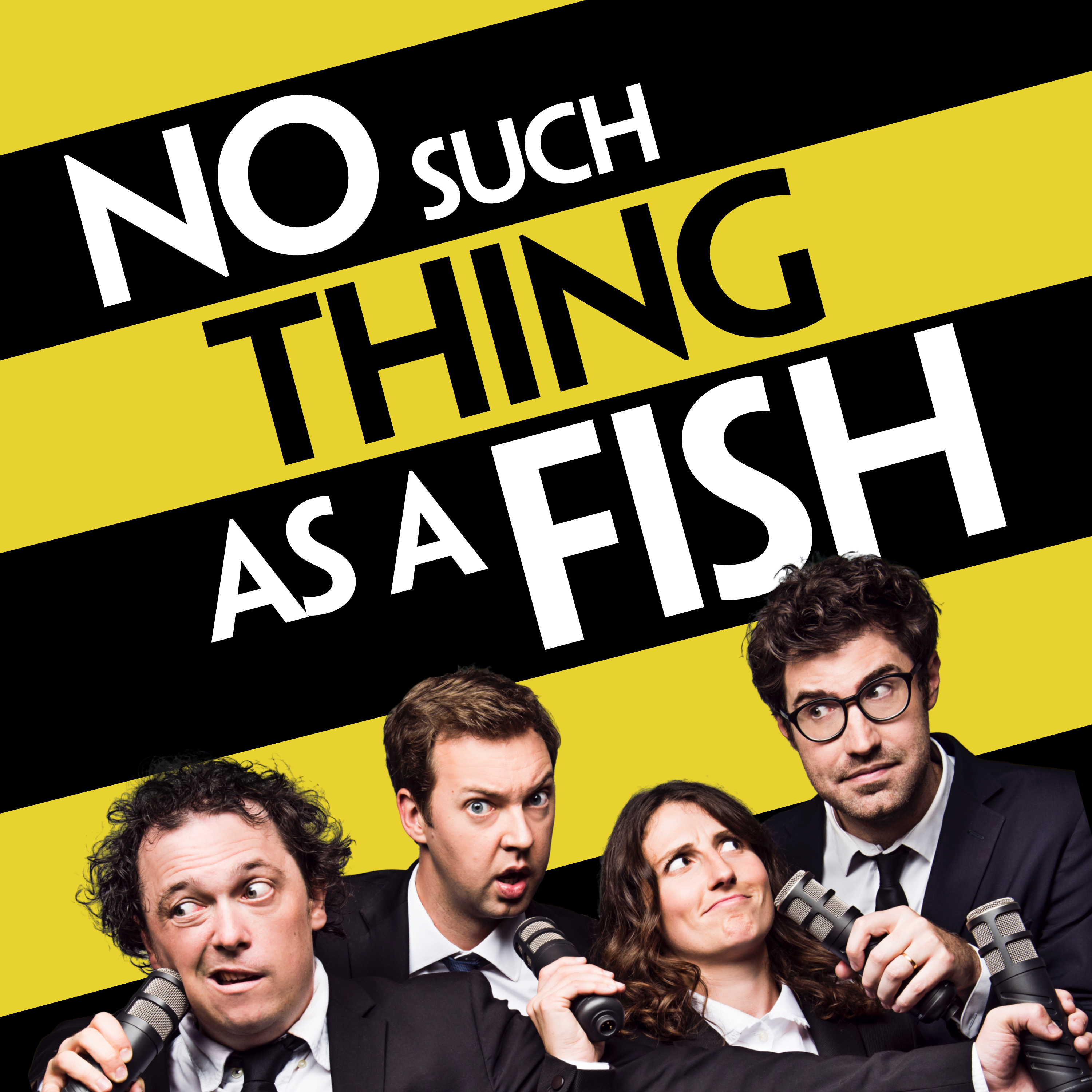
No Such Thing As A Fish
No Such Thing As A Fish
We Can Be Weirdos
GlobalDownload This Show
ABC Australia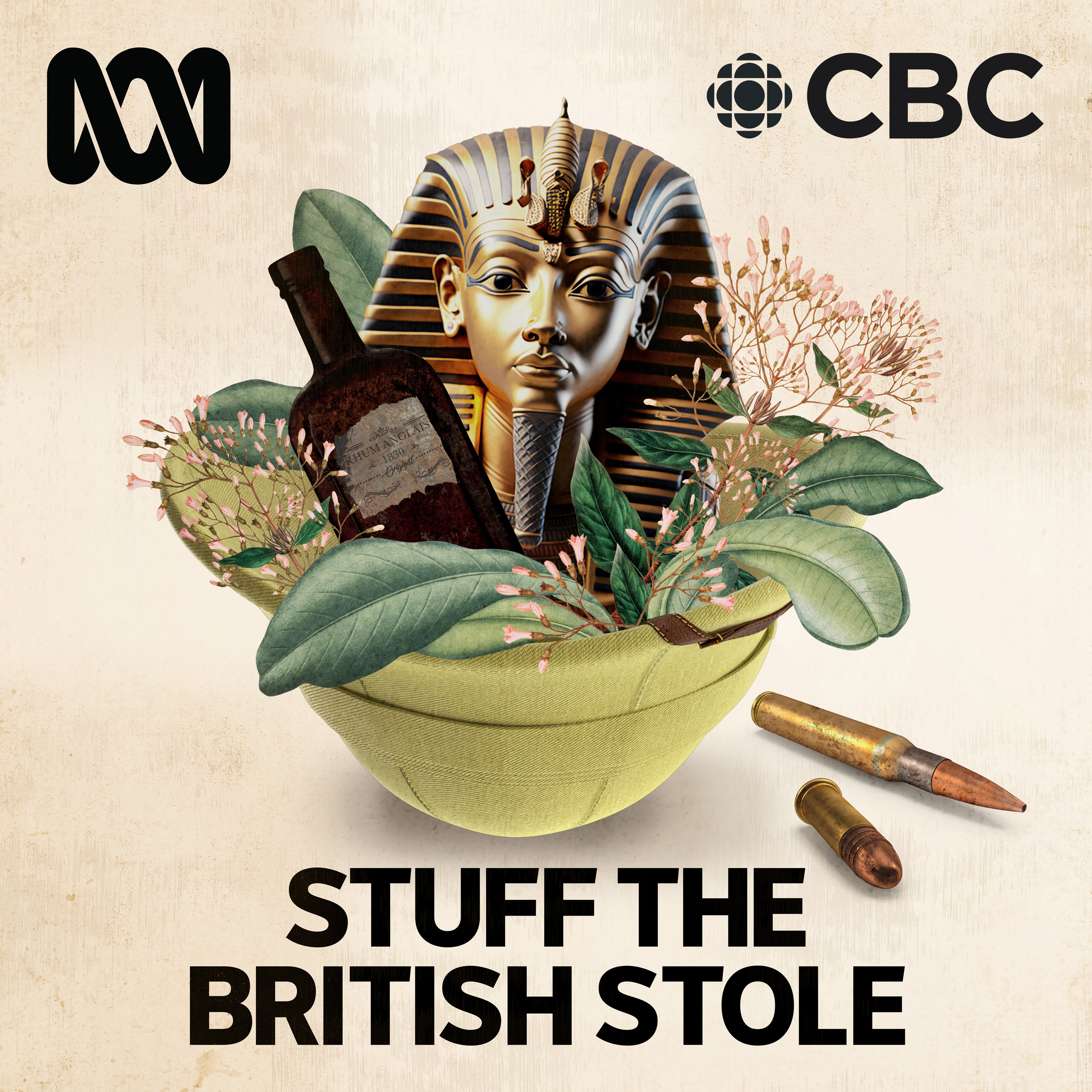
Stuff The British Stole
ABC Australia and CBC
The iDeveloper Podcast
Steve Scott (Scotty) & John Fox
Raven On: A Pop Culture Podcast
Natalie Bochenski & Stuart Layt
Smart Enough to Know Better
Dan Beeston & Greg Wah
TopMusic Piano Podcast
Tim Topham
The Chopin Podcast
Garrick Ohlsson and Ben Laude